Skip to content

Posts from the ‘Meat Myths’ Category

A Look Inside Glass Walls of a Slaughterhouse… A Pork Plant

A while back I shared a video looking inside the walls of a beef slaughter plant. If you missed it, I highly suggest you check out that post! In the post I said,

It’s no secret that customers of the meat industry have been searching for transparency within the industry for a while now. Every time an undercover video comes out or things like Lean Finely Textured Beef get “exposed”, people begin to scramble looking for answers. Where do they go to look for answers..? Their friends, their family, those people that they trust to provide them with the truth. I am sure that most people don’t go looking to American Meat Institute (AMI)  for answers. But regardless of where you go, AMI decided to finally join in the conversation of animal slaughter and began work on a video looking inside a slaughterhouse. And I am so thrilled that they’ve decided to join in this discussion because well, if I didn’t have the experiences I’ve had in my lifetime, known the many farmers and ranchers I do, as well as seen first hand many an animal slaughtered at large and small processors alike, I too would want to take up a vegetarian and vegan diet too! Those undercover videos put out by animal rights/animal welfare groups are hard to watch, they are very graphic, and quite frankly they aren’t how I want my industry to be portrayed.

American Meat Institue has now produced and released another video, this time taking us through a pork slaughter facility with narration by the esteemed Temple Grandin who has made huge advances working together with the packing plants to constantly improve their animal handling techniques as well as many other things. If you’ve followed our blog for some time, you know that we strive toward being transparent and we hope that as customers and consumers begin to ask more and more questions, the rest of the meat industry will follow suit. We have had some people in our own industry tell us that our customers don’t want to see this stuff. But we choose to share these things, even if they are hard to watch, because we appreciate honesty in our industry and think that it is important.

So if you’re really interested in an inside look of how a commercial slaughterhouse runs.. please watch this video.

DISCLAIMER: This video shows hogs being stunned, being bled, and de-haired. This video is graphic but it is a true and honest depiction of what really goes on.

We would like to thank AMI and especially Temple Grandin for all of their hard work.

We thank Dr. Grandin for the 21 years of assistance she has given us in better understanding livestock and working with their natural instincts to keep them calm and minimize stress. She has been our teacher, our partner and sometimes our critic. But she’s always been honest. We also thank her for her willingness to be part of this major step forward in transparency. – American Meat Institute

Please share with us your thoughts, your concerns, your questions. I’ve seen this process happen many, many times and I assure you, this video is how it happens folks. And we are working towards, one of these days, putting out our own video of Dave and his mobile slaughter truck in action!


Enhanced by Zemanta

The Challenges of Local Meat

We get quite a few people coming in on a weekly basis asking if we sell local meat. And the answer to that question is NO. But is it by choice? Absolutely not. You would think that it would be as simple as finding cattle, hogs, or sheep for us to buy, slaughter, and cut up to put into our meat case. But it isn’t that simple. Why not? There are a few limiting factors as to why it’s not as black and white as it seems. Read more

Are There Hormones in Meat!?

The simple to that question is well, yes. There are hormones in everything… In you, in me, in animals, even in vegetables. That’s just a fact of life. Are hormones added to the animals before they are killed for meat..? Well the answer to that question is basically yes.. Is there a need to be concerned..? Absolutely not.

First of all, hormone use in livestock production only occurs in beef cattle not pork or chicken. And in fact USDA has outlawed hormone use in both pork & poultry production. There are many reasons for this ranging from the chickens and hogs are much more efficient at converting feed than cattle, to the time required to inject each and every chicken is not worth the end result. Bottom line is: if you’re spending more money on that label with the chicken breast that says “hormone free”, sorry to say it, but you’re wasting your money. Hormone use in cattle is not something new to production.  Cattle have been receiving hormone injections for well over 50 years and in fact it is well regulated, monitored carefully, & proven safe. Currently, over 90 percent of the cattle fed in the U.S. receive a hormone implant during growth and this usually occurs as the animal enters the feedlot. The effect of the hormone implant will have worn off well before the animal is shipped to market, basically meaning that the effectiveness of the hormone implant will have terminated well before the animal is slaughtered.  Therefore, residues and/or traces of this hormone implant is not an issue. Read more

Does Brown Meat Mean It’s Bad…?

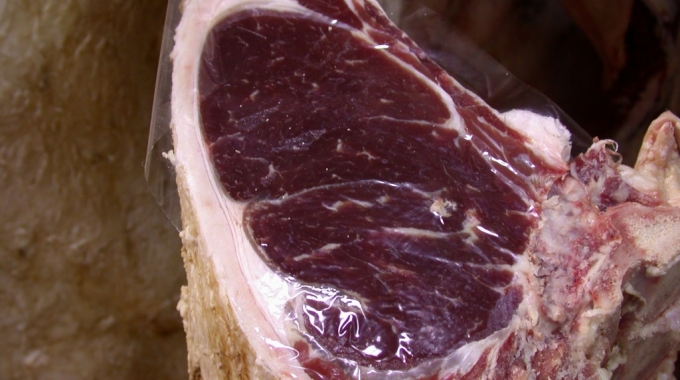
A few evenings ago, I was consulted by a friend of mine about the color of meat and how to tell if it’s bad. She sent me this photo….

Dark MeatBack story… this woman bought these steaks, opened them up, turned them over, and found this…. She assumed they were bad and threw them out! She then went ahead to post the photo on Facebook with a comment about how upset she was her steaks were bad. Although I don’t know this woman, I wish I would have been able to let this woman know her steaks were perfectly fine. And it makes me sad that nobody on those 20 comments told her that either.  Read more

Meat Supply in Danger…?

Lately I’ve been seeing confusion coming across our social media feeds in regards to the government’s plans for sequestration and the meat industry. If you aren’t aware of what’s going on, you should be. After all, it could affect all of us. And to us in the industry, it’s a scary thing.

So what’s all this about…? Well last week, Secretary of Agriculture Tom Vilsack announced that, in order to meet the required budget cuts demanded by the sequestration plan, federal meat inspectors would be required to go on a two week furlough. So what does this mean..? Basically, all meat production under federal inspection will cease to exist for two weeks. Read more

Bacon Shortage…?

I’ve seen a few people joke about it… I’ve seen a few people seriously ask about it.. And I’ve seen news media all over it. Is there really going to be a bacon shortage…? The simple asnwer is no. Well, because, bacon requires pork so in order to be a bacon shortage, there must also be a pork shortage. I’ll get into the whys and how comes a bit later. First, let’s talk about BACON. How many of you actually know what cut of the hog bacon comes from…??

Where does BACON come from…?

Bacon, as we know it here in the United States, comes from the belly of a hog. If you remember from WAY back when I posted this in depth write up about how we take a hog from hanging on a hook, cut it up, and send it out the door in packages.. You can find this image:

Read more

BPI Retribution Rightly Sought..? Or Publicity Stunt?

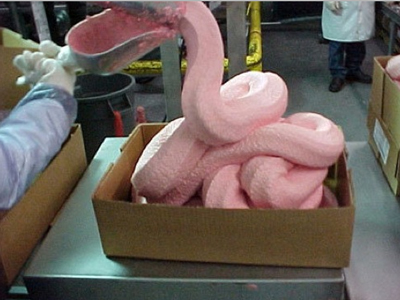
Just when we thought Lean Finely Textured Beef or in the news media known as “Pink Slime” was behind us.. It rears it’s ugly head again. But this time it isn’t the news media leading the way, it’s BPI. They came out today announcing a lawsuit against ABC and some of its main reporters. For more in depth information check out this link. And now LFTB and pink slime is all the buzz again with some people calling the lawsuit “without merit” or simply a “publicity stunt”. I will admit, I am not thrilled to resurrect LFTB in the public sphere once again simply due to the misinformation that was literally plastered on every computer and tv screen across America. Read more

A Look Inside the Glass Walls of a Slaughterhouse

It’s no secret that customers of the meat industry have been searching for transparency within the industry for a while now. Every time an undercover video comes out or things like Lean Finely Textured Beef get “exposed”, people begin to scramble looking for answers. Where do they go to look for answers..? Their friends, their family, those people that they trust to provide them with the truth. I am sure that most people don’t go looking to American Meat Institute (AMI)  for answers. But regardless of where you go, AMI decided to finally join in the conversation of animal slaughter and began work on a video looking inside a slaughterhouse. And I am so thrilled that they’ve decided to join in this discussion because well, if I didn’t have the experiences I’ve had in my lifetime, known the many farmers and ranchers I do, as well as seen first hand many an animal slaughtered at large and small processors alike, I too would want to take up a vegetarian and vegan diet too! Those undercover videos put out by animal rights/animal welfare groups are hard to watch, they are very graphic, and quite frankly they aren’t how I want my industry to be portrayed.

We often give tours through our shop because we love to show people firsthand what we do. However, sometimes public tours are not an option, especially in large plants. And it’s not because slaughterhouses don’t want you to see inside what they do. Animal rights activists have commented that if “slaughterhouses had glass walls, people would be vegetarians”.  And I don’t believe that at all. There are numerous reasons as to why large plants can’t allow public tours. First being food safety. Workers in large plants wear sanitary clothing, wash their hands and boots before entering certain areas of production and having public tours coming through could potentially introduce contamination into the plant. Another reason why public tours aren’t always feasible is due to safety. Plants that slaughter large volumes utilize an assembly line containing large, dangerous equipment. Having someone in the wrong place at the wrong time could result in serious injury to either a visitor or even a distracted employee.

I’ve said it before and I will say it again… Slaughter is not something that can be easily glamorized. It’s bloody, it’s graphic and I will admit that watching the slaughter of an animal isn’t for everybody. But if you choose to eat meat, I invite you to experience it  because after all, this is where your meat is coming from. And this is how it is coming from the pasture to your plate. In a statement issued by AMI they say that, “As meat packers, we have an ethical obligation to do the best job we can honor the sacrifice these animals make to feed people.” And I think most processors would agree with that. We value the animals in our lives and we appreciate the sacrifice they are making to feed our families and your family.

So if you’re really interested in an inside look of how a slaughterhouse runs.. please watch this video

DISCLAIMER: This video shows cattle being stunned, being bled, and skinned. This video is graphic but it is a true and honest depiction of what really goes on.

AMI as well as many processors across the country also thank  Temple Grandin for all of her hard work.

We thank Dr. Grandin for the 21 years of assistance she has given us in better understanding livestock and working with their natural instincts to keep them calm and minimize stress. She has been our teacher, our partner and sometimes our critic. But she’s always been honest. We also thank her for her willingness to be part of this major step forward in transparency. – American Meat Institute

Please share with us your thoughts, your concerns, your questions. I’ve seen this process happen many, many times and I assure you, this video is how it happens folks. This is the beginning of the glass walls of a slaughterhouse.

Enhanced by Zemanta

Fun Meat Fact Friday: The Real Story Presentation, Dispelling Meat Myths

So yesterday I got the wonderful opportunity to attend a local Rotary meeting and present something regarding the meat industry today. I decided to take this opportunity to set straight a few myths commonly found in our meat production today. Being at the forefront of these is “Pink Slime” or LFTB and Hormones in Meat! I received such a wonderful response from my presentation, I decided that I would post it for everyone to check out. Granted, this is meant to be presented. However, I work very hard to present information that is very clear and easy to understand for anyone not involved in the meat industry, so even without being presented, you can still understand the main points of the presentation. Please click the link below and check it out! Feel free to share it with anyone and everyone in your circles… The only way we are ever going to get out of this new media sensationalism is if we can successfully spread the correct, science based information!

Meat Powerpoint

And I thank you, all my readers, for taking an interest in learning about my industry! It makes me so excited that people are so eager to learn about meat and how it’s really produced!

Happy Friday!

P.S. If you are wondering about any sources used, please shoot me an e-mail: dancincow16@hotmail.com and I would gladly link you to them!

Most Commonly Asked Meat Questions

As I was brainstorming about what to write about today, I came across this article written by three people in the meat science field tackling the most commonly asked meat questions. Upon reading through it, I find it to be a wonderful resource for some of the more common questions that I know I’ve been asked before as a meat processor. So rather than me trying to tackle all the questions myself, here are what the experts in the field have to say from everything to how long frozen meat can be good for to what’s the difference between natural and organic.

For more information or my take on some of the topics covered, you can check out my blogposts

Internal Temperatures

Natural, Organic, Grass-fed

And for more information on antibiotics in meat, please check out this article. It really puts hormone use in the industry in context and you will come to find out that it’s not nearly as bad as the media hypes it up to be:

Hormones in Context


Follow

Get every new post delivered to your Inbox.

Join 2,731 other followers