Fun Meat Friday: Morals and Meat…?

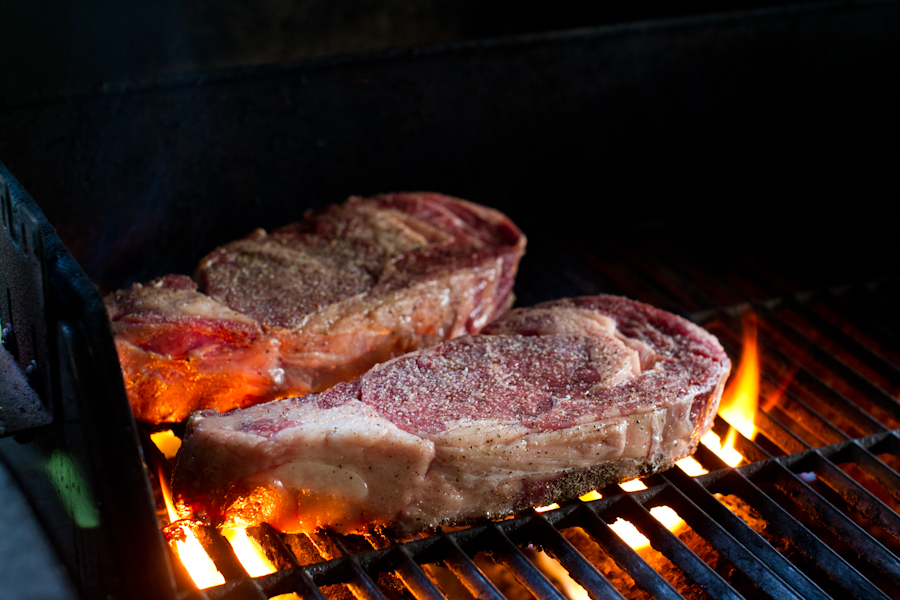
Lately I’ve been seeing a lot of talk about morals and ethics regarding agriculture and especially meat and its production methods… And it got me into thinking… Since when are people concerned with the MORALITY of eating meat? And why did this all of a sudden come about..? Why all of a sudden am I being required to justify why I kill and eat animals for a living…?

Meat was a huge part of evolving us to where we have become as humans today. Paleontological evidence suggests that meat constituted a substantial proportion of the diet of early humans. Hunter-gathers depended on the organized hunting of large animals as a main part of their food source. As time evolved, meat was considered a delicacy. In times when social hierarchy reigned supreme, people who had the most money ( the rich) were the ones who enjoyed the best and largest quantities of meat. Meat could have been considered a sign of wealth. Not everyone could afford meat and for those who couldn’t, it was often saved for special occasions and holidays.

When the promise of a New World with land became a reality and early settlers first landed here in the United States, people settled on farmlands and raised their own meat. For the first time in our history of a people coming from Europe, more people were able to provide for themselves. As well as enjoy some delicacies that were only allotted to rich people back in Europe. But as we grew as a society, people moved out of the farmsteads and into newly formed cultural epicenters or cities. Eventually the idea of a supermarket or grocery store came about in order to supply those people with a means to obtain food to feed their families. Soon, grocery stores and supermarkets became the food supply and the disconnect began. And as we grow, the disconnect continues until eventually we become so far disconnected that the average person relies on news media or people outside the industry to provide them with the connection of where their food comes from.

Now today, as we move back towards mending that disconnect between where our food comes from, an issue of morals suddenly arises. Suddenly meat is no longer viewed as the delicacy it once was. It does not hold that social status it once held. Why is it that the closer we move towards people finding out where food comes from.. the worse the sensationalism gets? The more my industry is battered and beaten up by the news media.. Between Pink Slime, Meat Glue and The New York Times running it’s Ethics of Eating Meat Contest, why should my morals regarding meat all of a sudden be in question when historically it was never questioned before?
My take on the issue is YES, emotion should play a key issue in food production and relating to our customers, consumers, whatever you want to call them. But morals… morals is a sticky road to go down. What is moral to one person may not be moral to the next..? And what defines our morals..? Upbringing, religion, experiences all can play a factor in what is MORALLY right or wrong to us. Everyone’s experiences and perspectives are different. So who are you to question MY morals..? What gives you the “moral high ground” to question the way I choose to eat..?

Rarely do I ask for feedback on my blog posts, but I’ve asked this question a few times on several social media outlets. The responses are so varied and to see different perspectives is really fascinating. And really, there is no RIGHT or WRONG answer here. Morals are morals and everyone’s is different. So now I am asking it to my readers.. I invite you to comment and give your two cents on if you think morals should even play a role in meat..? And why all of a sudden this issue of morals is brought to the forefront…?

Wordless Wednesday: Snacksticks, Bacon, and Lamb. Oh my!

20120523-085102.jpg
One of our new flavors of snacksticks: Pepperstick with Pepper Jack Cheese

20120523-085227.jpg
Bacon. We will be seeing a lot more of this with fair season coming!

20120523-085336.jpg
Remember all those lambs I posted a few weeks ago…? Yep. We’ve been hard at work getting them cut to make room for fair animals.

Fair season is upon us! And what better way to buy and support local than at the Junior Livestock Auction!?
Happy Wednesday everyone!

Fun Meat Fact Friday: The Real Story Presentation, Dispelling Meat Myths

So yesterday I got the wonderful opportunity to attend a local Rotary meeting and present something regarding the meat industry today. I decided to take this opportunity to set straight a few myths commonly found in our meat production today. Being at the forefront of these is “Pink Slime” or LFTB and Hormones in Meat! I received such a wonderful response from my presentation, I decided that I would post it for everyone to check out. Granted, this is meant to be presented. However, I work very hard to present information that is very clear and easy to understand for anyone not involved in the meat industry, so even without being presented, you can still understand the main points of the presentation. Please click the link below and check it out! Feel free to share it with anyone and everyone in your circles… The only way we are ever going to get out of this new media sensationalism is if we can successfully spread the correct, science based information!

Meat Powerpoint

And I thank you, all my readers, for taking an interest in learning about my industry! It makes me so excited that people are so eager to learn about meat and how it’s really produced!

Happy Friday!

P.S. If you are wondering about any sources used, please shoot me an e-mail: dancincow16@hotmail.com and I would gladly link you to them!

Wordless Wednesday: Spring Lambs

Well you always know it’s been spring weather around here because we get our run of sheep through our mobile slaughter truck. Yesterday, owner Dave Dewey, had his work cut out for him harvesting all these lambs. In 90 degree heat! Nobody every said the job of a butcher was easy! So today, take a minute to thank those people who work hard to put food onto your plates!

20120509-090135.jpg

20120509-090456.jpg

Happy Wednesday everyone!

Fun Meat Friday: Pork Chops with a Tomato Cream Sauce

This recipe is absolutely delightful! In fact, it’s one of our owner’s (Dave Dewey) favorite recipes of mine. It is man approved and in fact, legends of this recipe actually sent a woman into labor the next day after eating it! Super easy and sure to be a crowd pleaser.. Afterall, who doesn’t love pork chops!?This recipe is perfect for a hearty eater of a man and a woman, but it can easily be doubled, tripled, whatever to food a larger crowd.

Now, if you are one of those people who tends to always overcook pork, do yourself a favor and get an instant read meat thermometer. We sell them at our shop or you can find them at the grocery store, Target, Wal Mart, where ever! A meat thermometer takes the guess work out of “if it’s done” or not. And you will be guaranteed moist, juicy pork every time!

For the pork chops, you can use bone-in chops or boneless. I use boneless, makes it easier not having to fight around a bone. Whatever you do though, make sure they are thick cut. 1″ thick at least. If you try and use pork chops that are 3/4″ or 5/8″ for this recipe, they will end up dry and overcooked, unless you adjust the cooking time.

If you can’t get your hands on pork chops that are already thick cut, cut them yourself! Buy a boneless pork loin and cut the chops however thick you want them! You can do it!

So now that we’ve got our chops, we are ready to begin. And of course, here is the ingredients needed for this lovely meal!

First preheat your oven to 350 degrees. Then start off by pouring the flour into a plate or shallow bowl. I use paper plates because it means less dishes and easy clean up. If you’re feeling fancy, use a plate or bowl. Season the flour with a bit of paprika (about 1/2 tsp.), garlic powder (1 tsp.), salt, and pepper.Take a fork and mix  this together.

Next crack two eggs into a bowl and beat together with the milk. Then grab another plate or shallow bowl and pour in the breadcrumbs. If you are using plain breadcrumbs like me, season with salt and pepper. Once you are done, these three things should be much like an assembly line, sitting one next to the other. From left to right: Flour, egg/milk, and breadcrumbs.

** Please not in the photo, your flour probably won’t look as full as mine. I usually don’t measure when cooking so I always end up with too much! ;) And like I said last time with the stew, a little bit too much here or there won’t hurt. This is another recipe where being precise isn’t crucial.

Next take your pork chops, one at a time, and first dredge them in the flour. Make sure to coat all sides with flour. Then move it to the egg/milk mixture making sure to coat all sides again. Finally roll it around  and cover it with breadcrumbs. What we are doing here is breading these pork chops so they will have a nice crispy crust on them.

Set them aside on a clean surface while you finish up the rest. I use tin foil for easy clean up and so that I don’t get raw pork juices all over. Once the pork chops are breaded, they should look like this…

Heat up a fry pan over medium high heat. Add olive oil. And butter for good measure. Although the butter can be omitted.

Once the pan is good and hot, throw in the pork chops and brown them on both sides until they are a nice golden brown. And much like with the stew last week, the pork chops will not be cooked all the way through.The point is not to cook them, but simply to brown them. Once they are browned, remove them from the pan to a baking sheet. Look at how pretty golden brown they are and pop them into the preheated oven!

Bake the pork chops for about 15-20 minutes or until they reach an internal temperature of 155 degrees. Safe internal temperature for pork has been lowered to 145 degrees so you can pull them at 145 degrees if you like them extra juicy. Although juices flowing out of pork often times freaks people out, so I pull mine at 155 to appeal to everyone.

While the pork chops are baking, heat up 1 1/2 cups of heavy cream in a saucepan on the stove. Simmer the cream for about 8-10 minutes or until it starts to thicken. You can even let it get to a boil, but be careful not to burn it.

Once the cream has thickened up a bit, add in 2 tablespoons of tomato paste and 1 tablespoon of spicy brown mustard. I forgot to photograph the mustard, whoops! But don’t forget to add it in!

Once you whisk it all together, the sauce should be a nice orange-y color, like this…

Now to counteract the acidity of the tomatoes, I usually add a dash of sugar to my sauce. This is optional. Taste the sauce and if you like it the way it is then leave it. Or if you wish, add the sugar. I usually always add cracked black pepper to mine as well. If you think it needs more tomato sauce, add it. If you think it needs a bit more mustard, add it. Or if it’s too harsh for your taste, add a bit more cream! Remember when I said precise wasn’t crucial…?

Now about the time you finish the sauce, your pork chops should be just about done in the oven. Pull them out and plate them. Pour some of the creamy, delicious sauce over the top, garnish with a bit of fresh chopped parsley or cracked black pepper! ENJOY!

As  you can see, I usually accompany this meal with potatoes, but you can use rice, pasta, or no starch what-so-ever. Whatever you fancy, these pork chops go great with anything!

And of course, I included a printable recipe! Please let us know how this recipe turned out for you!

Fun Meat Friday: Stew Made Easy!

So I know I promised I was going to write about BSE today, but I made stew last night and got this fantastic idea to photograph it and blog about it… And everyone loves stew right!?

Now with the weather in North Dakota currently stormy and from the looks of it, the weather in Chico isn’t much better, what a perfect weekend for stew! And it’s such an easy, perfect weekend meal!

So first of all…. what kind of meat makes good stew..? Well basically anything that requires braising or cooking in a liquid. Typically the most tender meat does not make for good stew meat. It’s got to withstand a long time cooking so something really tender would literally fall apart halfway through.

Some good cuts for stew meat are any part of the chuck, arm (h-muscle, shoulder clod), top or bottom round, brisket, plate, or even top sirloin if you are feeling fancy! If you are unfamiliar with these cuts, please check out my  guest post on cutting up a beef: http://thebeefjar.com/2011/07/25/guest-blog/

Now what essentially makes these cuts stew meat is the fact they are cut into about 3/4 to 1-1/2 inch cubes. You can have your butcher do this, but be advised that some places may charge more to do this. Here at Chico Locker, we charge the same amount for stew meat as we do a chuck roast, so we save you the mess and hassle. But really, it’s not hard to do. You can pick up any kind of roast from anywhere and cut the stew meat yourself in a pinch.

OR if you have roasts left in the freezer from your beef, thaw them out and use those for stew meat! Really anything that isn’t a steak makes for GREAT stew meat!

Either way… Your stew meat should look something like this:

Alright once your stew meat is all cut. The next step is to put it in a large bowl and add about 2 tablespoons of flour and add some salt, and pepper. And mix it all together. *I didn’t photograph this step because at this point I hadn’t decided to blog about stew yet*

Let this flour, meat mixture sit while you prepare the rest of the ingredients. Beware: lots of chopping is involved in stew.

So here is the ingredients I put in my stew (minus a few not pictured). You can really add anything to stew. I’ve added parsnips, turnips, peas, green beans, whatever you fancy. Throw it in the pot when the time comes! And don’t worry about being too precise on any step of this, the beauty of stew is that it isn’t one of those recipes where being precise matters. Which is also one of the reasons it’s so easy! There really is no right or wrong way to make stew.

Cooking Tip: I find it easiest no matter what I am cooking to prep everything BEFORE you begin cooking. Chop everything you’re going to need, open all cans, etc. By doing this you really eliminate burning meals because all you need to do is throw ingredients in.

Find a rather large pot and heat ‘er up on the stove. Put some olive oil and butter in the pan. I use about 2-3 tablespoons of each. Or use one or the other, either way works. Once the pot gets hot, dump your stew meat in and brown it. And if you have a bunch of stew meat, brown it in batches. You want to make sure that each cube has room to brown. The object of browning the meat isn’t to cook it all the way through. It will still be bloody and red/pink inside. Your browned stew meat should look something like this.

Once your stew meat is all browned, remove it to a clean plate. And add about a cup and a half of red wine. And let the wine simmer in the pan while you scrape all the browned delicious little bits off the bottom with a spoon.

Then add some beef broth (about 4 cups) and a can of beef consomme soup.You don’t have to use consomme soup but I like to use it because it gives a little richer flavor than just using beef broth.

Then the secret ingredient: BEER! There’s just something about putting beer in stew that helps lend to super tender meat. I had Guinness on hand, but you can use any sort of beer really. I wouldn’t suggest anything flavored though. Sierra Nevada Porter works wonderfully too or Budweiser, whatever you drink!

Now that we’ve got our base. Time to start adding the veggies. Usually during this time I add some more salt and pepper. And of course, taste it to make sure I’m not missing anything. If you’d like your stew to have a little pep, some Tabasco can be added here. I added a bit of Worcestershire sauce to mine.

Add the chopped onions and carrots.

And the potatoes and celery. Just throw it all in. Add the browned meat back to the pot as well! And of course, got to add some herbs. I used thyme and rosemary. Now here’s the hard part… Put the lid on this and walk away. Let the stew simmer for about an hour a half to two. Or until the meat begins to become tender. With about a half hour left, open the lid and check ‘er out. At this time I usually like to taste test the meat, potatoes, and carrots to ensure they are all cooked. Also if your stew is still rather liquid-y and hasn’t thickened up. Take about 2-3 tablespoons of cornstarch and mix it with a little bit (1/4 cup or so) of water. Dump this into the stew and stir up.

About 10 minutes before you are ready to eat, time to add some final ingredients. If you like corn, peas, or green beans in your stew. Now would be the time to add them. Adding them now will ensure they don’t get all mushy. I added corn to mine. Also if you need to add more cornstarch/water mixture to thicken ‘er up. Do it! Let it cook for a few more minutes. Your kitchen should be smelling delicious and your stew should look something like this:

Look at how amazing this looks!? Now is the best part. Get out a bowl and serve it up! Along with some fresh bread! Delicious! And perfect for a rainy day weekend!

So there you have it! Stew made easy!! This recipe can also be adapted to a slow cooker/crock pot! Simply brown the meat and put all ingredients in the crock pot!

For a printable of this recipe, here you go:

Wordless Wednesday: I Heart Beef

In light of the recent finding of BSE (bovine spongiform encephalopathy, commonly called “mad cow”) and even LFTB, today I am supporting beef. Which is safe, healthy, and for the time being affordable! I heart beef!

20120425-100400.jpg

Now go enjoy some beef today!

For more information or questions regarding BSE, please feel free to leave a comment or check out these resources.

Please note regarding this instance: The animal IS NOT in our food supply. Nor can milk transmit BSE. A situation like this shows us that preventative actions put in by our government are WORKING in regards to BSE.  There is no reason for consumers to FEAR for the safety of their beef or milk. “USDA remains confident in the health of the national herd and the safety of beef and dairy products.”

Statement Released from USDA

General Information Regarding BSE

Consumer Safety and BSE

I am working on a Meat Fact Friday regarding this issue so please stay tuned! Happy Wednesday everyone!

Dear Chico News & Review…Let’s Be in This Together!

I sat down today to write regarding the issue of my letter to the editor and blogpost being “slimed” last week in the Chico News and Review GreenHouse Section by the author Ms. LaPado. In case you missed it.. It all started with this blogpost: http://chicolockersausage.com/2012/03/30/what-our-local-newspaper-has-to-say-about-lftb-pink-slime/

And then two weeks later, here is what resulted: http://www.newsreview.com/chico/slimetroversy-continues/content?oid=5699952

Upon reading this response to my blogpost and letter, it still leads me to seriously question some of the information brought up in the column and I am disheartened to read that misinformation is still being provided and that none of my science, based sources were used or cited. Rather a column from the Independent Green News Source, Grist, was used as a main source. But what is done is done and there’s no use to beat a dead horse. Readers of your column as well as my blog have made up their mind about Lean Finely Textured Beef and I think it’s best we lay that issue to rest.

Ms. LaPado, I am sorry if you took my response to be hostile or attacking you, all I was asking you and your paper to do is report accurate, science based facts regarding the issue. I’d like to take this time to thank you for forwarding readers to my blog as well as our business. I’d also like to thank you for being a continued customer of Chico Locker & Sausage Co. Inc., it is customers like you that help feed our family and keep us in business.

But this whole issue over LFTB brings me to an even larger issue that, though this interaction with The CN&R, has become very apparent to me. That larger issue is our local newspaper’s lack of representation and support for all facets of agriculture. After all, we live in one of the most diverse counties for agriculture in California. Take a drive around, open your eyes. Agriculture is all around us.

According to our most recent annual crop report, Butte County’s gross value of agricultural production totaled over $622,000,000 which is a 42 million dollar increase in just one year from 2009. This cannot even compare to 1939 when the first crop report was compiled and the estimated gross value of production was $9,451,293. Since 1939 when rice reigned supreme, twenty other crops have made it into the list of Butte County’s Million Dollar Crops.

The founder of our town would have been so proud of how far we have come in his passion of Agriculture in the county in which he helped form and found. He has been hailed as one of the founding fathers of modern California agriculture. In fact, it’s thanks to John Bidwell that we even produce many of the crops found in our area. Both a rancher and a farmer himself, he believed “that California’s future lay with farming”.

On an even larger scale, California has been the number one food and agricultural producer in the United States for over 50 consecutive years. More than HALF of the nation’s fruits, nuts, and vegetables come from California. Products that are EXCLUSIVELY grown in California (99% or more) include almonds, artichokes, dates, figs, kiwifruit, olives, persimmons, pistachios, prunes, raisins, clovers, and walnuts. It is because of our state that the rest of the country gets to enjoy all of these foods. And not only the rest of the country, but also the world. So not only are we sustaining our own counties, our country, we are also providing for other parts of the world.

Did you know that only 9,000 farms concentrated in six states produce rice for our entire country? 9,000 farms harvest 3 million acres of rice. California ranks number two in total production of rice supplying 18% of the total production. And guess who are the top producing countries of rice in California? Our county, along with all of its neighbors, help make up that 18%. Ranking from highest to lowest: Colusa, Sutter, Butte, Glenn, and Yuba.

What does all of this tell you? Well, it tells us how important agriculture is to our economy and our county. Can you imagine trying to sustain Butte County without agriculture? ALL agriculture, not just specialized markets such as organic. Not only are we sustaining our own county as well as feeding our own county, but we are also helping provide for the greater good through exporting our products. Currently, twelve of the numerous commodities produced in Butte County are exported to OVER 50 different countries. Many countries included in the list of Butte County exports are countries that are in financial as well as economical hurt. Countries where people are currently starving and we are exporting goods produced in our own county to help these people!

So CN&R, agriculture is what makes it possible for us to live around here. It is the blood of our economy, it sustains us. It gives much of our community means to provide for their families, it puts food on your table as well as mine. It provides for those local sources you endorse and hail. Instead of featuring only one facet of this widespread community, why not share with the rest of us the beauty that is agriculture in California regardless of what your biased feelings on the issue may be? Isn’t that what journalism is supposed to be doing?

Since I am not a trained journalist in any form, I looked up some goals or rather ethics and standards of journalism. While various “codes” of journalism contain some differences, most all of them contain shared elements: truthfulness, accuracy, objectivity, impartiality, fairness, and public accountability.
As one of two main newspapers in our area, this is what the public expects you to do. To withhold the ethics of journalism and provide us with a truthful, accurate, objective, impartial, and fair view of the news around here.

Not sure who to consult? If I may offer a few suggestions to get your brainstorming going…

Offer a new column. A column supporting the beauty that is agriculture in the area. Feature farmers, ranchers, etc. Interview them. Share their story. Help open the barn doors as Dr. Temple Grandin calls it. Give consumers the transparency they are asking for. You will come to find out that many stories of our local farmers are indeed very beautiful in the fact that they are continuing on a legacy of a business started by their grandfathers, great grandfathers. Some farms around here are entering into their fourth and fifth generation.

The website KnowACaliforniaFarmer.com is a great example of a campaign to help farmers tell their story. It provides people with a source to read blogs, watch movies, get to know Farmers all across California. It shows consumers that in fact, farmers are willing to tell their story and share what it is that they do with the public. Many just don’t know how. They don’t have the tools needed to open that transparency.

Don’t want to hire a new writer on staff? Hire an intern from the College of Agriculture. With the economy getting tight and businesses downsizing, internships are hard to come by for students. This would be a perfect fit for a student. Going out into the field, the farm, and interviewing the farmers in our area.

Not sure who to consult..? Use your local resources. The California Farm Bureau is a great first start and home to many members of ranchers, farmers, and supporters of agriculture in our area. We are even lucky enough to have our own chapter here in Butte County! California Women for Ag, California Beef Council, Chico State’s Department of Agriculture and the College Farm, California Cattlemens Association, Butte County Rice Growers Association, and the list goes on.

It is really my hope here, Chico News & Review, that you will really take my words and suggestions into consideration. And please do not be afraid to contact me directly regarding information I’ve presented here or in my previous blogposts. I’d much rather deal with you on a personal basis than get “slimed” in your column. I would love to be a helpful resource for information regarding how you perceive my industry rather than wage a battle regarding the issue.

With the weather being so nice this weekend, get out of the house, take a drive, enjoy the sunshine, attending the California Nut Festival, celebrate agriculture in all forms. Be thankful for the farmers and ranchers in this area that are helping to provide for you and me. I invite you to join the rest of us in helping share their story.

For more information regarding sources used to find facts and figures presented here, please check out these links:
http://www.nass.usda.gov/Statistics_by_State/California/Publications/California_Ag_Statistics/index.asp
http://www.epa.gov/agriculture/ag101/printcrop.html
https://docs.google.com/viewer?a=v&q=cache:qscMWPQAHjYJ:www.buttecounty.net/Agricultural%2520Commissioner/~/media/County%2520Files/Agriculture/Public%2520Internet/ButteCounty2010CropReport.ashx+agriculture+facts+in+butte+county&hl=en&gl=us&pid=bl&srcid=ADGEESh45UCd7QXvan2ofyWUiMkIa5qBbYuu7IzWOWfVpZTHe3Y-6sNydLSrFbsXQMhRV8bhQPPXMfVA98VMHtzfd9QqNeq3JgPwhiJRblcUyz2O0hpyQQRCnMe3wKcbnuW3bE3dMlgg&sig=AHIEtbTpGH6HRo6r8_mcpeGx8Gb5qiJESQ
http://www.newsreview.com/chico/john-bidwell-reconsidered/content?oid=26486